Showing posts with label iPhone. Show all posts

Wednesday, February 22, 2017

More In-Game Homage!

Some people whom I will not name got me into Tinker Island, which is a game on mobiles and such. Free to play, pay to do better faster kind of thing. But it has long term planning and resource allocation. Anyways, I came across this and was delighted:


It's homage, very directly, to the MC Hammer song, "U Can't Touch This" (I see I have forgotten the "U" part of the title). Awesome!

(In the image, you can make a hammer, it costs 150 wood and 150 stone -- must be a big hammer -- and you need overall 80 crafting units to make it, and your islanders have to put in 10 minutes of work when you put them to work on it. One islander who uses it will get +4 crafting.)

Edit/Update: Shortly after this post, I unlocked... Milson! Milson is a morale-maintaining ball (with a red mark on it), and is clearly homage to Wilson the Wilson-brand volleyball from the Tom Hanks film "Cast Away".


Update 2
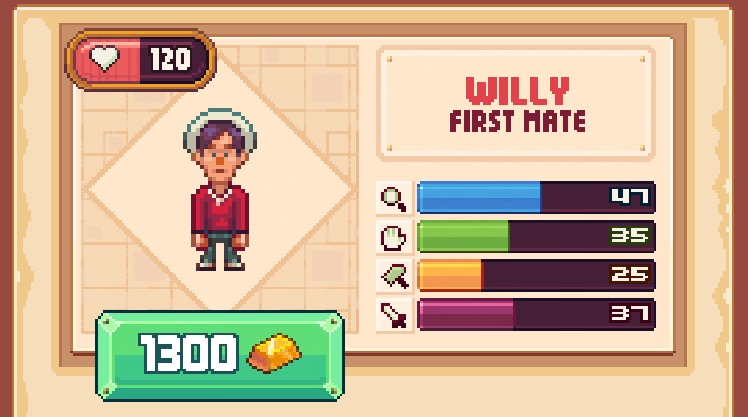
: Also, these two characters you can add. (Google is making this process difficult in terms of the layout....) We have a Gilligan copy (white guy, the shirt, the hat, castaway, first mate--and apparently "Willy" was intended as the character's first name I just read), and a Lara Croft copy (Sara instead of Lara, "relic hunter", white woman, brown hair, green shirt). Yes I could use the word "homage" instead of copy. My label is rather irrelevant, it's the idea. 


Wednesday, June 25, 2014

The Real Problem with the iPhone Fingerprint Sensor

It gets shmutzy and won't read your fingerprint until you clean it. This might involve pressing it hard enough to activate Siri. This is not a bad problem to have, "boo hoo I have a smart phone my life sucks."

When it came out, there were far too many breathless articles about how someone could make a rubber copy of your fingerprint and then hack your phone. This was stupid, and everyone knew it was stupid, but people wrote about it anyways. (And apparently a lot of people don't even have passwords at all on their phones, so....) In order to do this, you'd need to steal their phone and make a rubber copy of their fingerprint. How many times has this happened? Zero. Why? Because the internets would blow up if it did, and that hasn't happened.

(Photo credit Apple Inc.)

Friday, October 28, 2011

"I Told You So"

About five years ago I told a major market research firm the following:

Currently the Zune is too problematic to be part of the digital near-future.

I said that Microsoft had to "fix it." I don't think the market research firm liked that I said that, since they blew me off after that. Something happened earlier this month that was so barely noted I missed it until earlier this week: Microsoft cancelled the Zune. It is actually difficult for me to find a news outlet that I am used to using which reported it (but there is always Wikipedia).

I could say that it feels good to be right, but I've been right the entire last five years and I've always known it. As for the market research firm in question, well, they don't know what they are doing.

Monday, October 25, 2010

Apple, Handhelds, and Disruption in Markets

Every time I see an advertisement for a touch phone, smart phone, or whatever you call them, I can only think of how Apple created this working technological system and the market. Really they are touch-screen handheld computers, but they come marketed like phones, so we call them phones and think of them like phones--computers had modems built in, at one point, and we could actually make phone calls on them, but no one ever referred to a computer as a phone.


I don't want to say "the market for these devices wouldn't have existed without Apple," since that's not true, the market did exist before Apple made the iPhone, and that's why the iPhone immediately sold so well. However it is true that these smart phone, or touch-screen handhelds (TSH is not a good acronym, though), would not exist today without some company having made the move first and having a positive market response, and in this case, such an overwhelmingly positive response that every other phone player wants in on the game.

And that's why we have to think about disruptive technologies.

I am not, by far, the first to point this out. The radio powers in some decade in the past sat on the newer, better, FM technology since their entire empire was built on AM radio, and their manufacturing process didn't make radios that could tune to FM signals, and none of the radios out there could tune to FM. Eventually they rolled it out. I have read how companies fear new technologies, since it is risky, changing what you are doing is risky, and people fear losing their jobs if the company shifts to something new.

Thus, Apple. Not a player in the phone market. No one at Apple stood to lose much if the iPhone wasn't a hit. But they also had experience with the iPod, the iPod as part of the larger iTunes system, and they could learn from their earlier Newton, from Palm, and from RIM's Blackberry. And given than the iPhone is really a computer, Apple had experience in that market.

None of the established phone makers would have made an iPhone knock-off, like they all do now, it was simply too risky. They didn't have the experience, they were locked into thinking about cell phones and not touch-screen hand helds, and they didn't have an existing infrastructure into which they could connect the device (iTunes). It is possible that individuals or teams at the more innovative cell phone companies tried to push an iPhone-like idea, but it wasn't until Apple blew the cell market open did anyone else make one. And of course it isn't actually the cell market, it's something new that people took a while to figure out, just like the iPad.

Wednesday, September 1, 2010

Touch is not a Natural Interface

There is a rather dismal article over at the New York Times, To Win Over Users, Gadgets Have to Be Touchable, by Claire Cain Miller. (I think my expectations are too high for the NYT, but that's another story.) The main idea of the story is that the current touch interfaces (thank you, Apple) are "natural" and we don't need to learn them, we know them already.

Unlike past interfaces centered on the keyboard and mouse, natural user interface uses ingrained human movements that do not have to be learned.
But this is not at all true. A lot of the things we do with touchscreens are the exact same things, conceptually, that we've been doing with GUI interfaces since 1984 (GUI, for those of you who have forgotten, stands for Graphical User Interface, meaning, a mouse, windows, file icons, folders, probably a desktop, in other words, not the text-only CLI, which is Command Line Interface).

If you want an app to launch on your iPhone, you touch it.

If you want an app to launch on your Mac, you touch it with your mouse, which is your onscreen finger. Technically you mouse over it and double-click it, but, it's the same concept. Your mouse cursor is always in the screen, your finger spends most of its time not physically touching your touch-device screen. Same thing.

I could go on, but let's look at text. If you want to select text on your iPhone, you hold your finger on it and expand or select the amount of text you want. If you want to select text on your Mac, you have to take similar direct action on the text with the mouse cursor, which may involve clicking (perhaps with the shift key) or click-dragging or double-clicking.

It is, again, the same basic concept.

In some ways, it is not "ingrained." Widespread literacy is a historically recent phenomenon, but I doubt the ancient Romans poked their finger at text on a scroll and expected anything to happen.

In other ways, it is ingrained, because by copying the concepts from desktop, GUI-based, operating systems, touch-screens were copying a computer front-end that tried to mimic our human interface with our real-world offices: files, folders, trash cans, and a desk (desktop). If you want to do an action on an item, you poke it with your mouse cursor.

I've seen many a touch-device running Windows, where the mouse cursor follows your finger. I cannot remember what these devices are, they may be airport check-in kiosks. (I am pretty sure some were.) Your finger is the mouse.

Of course if you have an iPad or iPhone and there are no buttons on it, well, what's left to try? Touch.

I am reminded of a scene in one of the Star Trek films (the one with the whales, and Chekov's famous line about "nuclear wessels"). Scotty sits down in front of a classic form factor Mac, and tries to talk to it like he would his futuristic computer. The current-day assistant looks confused, and then hands Scotty the mouse, saying "Try this." Scotty picks it up and tries to use it like a microphone. (Eventually he gives up and uses the keyboard, which isn't a realistic approach to what he ends up doing, but that's besides the point.)

Natural interfaces are learned. (We spend many years learning how to interact and interface with the real world and especially people.) They may be easy, but they are learned.

Saturday, July 17, 2010

iPhone 4 Antenna Issues, Explained

The first thorough, understandable, and yet technological explanation of the iPhone 4 antenna issue that I have seen is over at TidBITS, an article by Rich Mogull. Well worth several minutes of your time.

Wednesday, June 2, 2010

Decorating Your Device

I was reading the summary of an article and I came across this sentence, roughly speaking:

they decorated their [devices] with shiny beads...
Typically, I'd be talking about cell phones, which is what I want you to think about. Typically, it would (also) be young women that do this. Hmm, Google is not helping much, trying to find images, but like this one generally speaking. (I assume there are tons out there, somewhere.)

However, the article is talking about the Afghan army, and how they "decorated their weapons with shiny beads." Nice. An AK-47 does send a message, doesn't it?

Edit: Oh found one! A real one that I took a photo of (owned by a woman), not just someone else's photo on the Internet. That's the back of an iPhone.

Edit, July 17: I was just in Manhattan's Chinatown and one store had several gemmed iPhone cases for sale out in front. I assume there were more to be found. I didn't get a photo though.

Thursday, May 6, 2010

The iPhone and Multitasking

One often-mentioned criticism of the iPhone, despite how the device and the information infrastructure in which it exists forced all the primary mobile carriers and manufacturers to produce and support touch-phones that are handheld computers/communication devices, is how it does not multitask.


I think it does multitask, though.

I have not read any official Apple specs about the iPhone and how it does not multitask, but I have never seen anyone say that it does, or that the critics are wrong. But if you have one, you can try this (and there are probably some other things you could do to get a similar thing to happen).

If you are in the photo app, you can choose to send a photo via text or email. If you choose email, the iPhone's email header with the to: and cc: and subject: fields comes up, you can auto-fill the to: field just like in email--basically it looks like you are in the email app and are sending an email with a photo in it, because you are. (I am not sure to what extent, though. It may just be "creating" an email, so it may not check for new mail.)

When you hit "send", you are taken back to the photo in the photo app. If the iPhone had no multitasking, your email would stop sending at this point. But it doesn't. It is being sent, from email, while you are in the photo app. It is multitasking.

If, when you hit send and then are taken back to the photo app, you switch over to the email app, you will see the "send" progress bar and see that it is making progress, but that it had started before you opened up email. Speed varies depending on the network, of course (wifi, 3G, reception, etc.).

There may be some reason this is not referred to as multitasking, but, to me it seems that it is indeed multitasking. I am in one app (the photo app) while another one is working in the background (the email app).

(See also my Reviewers are Pointless post about how it is easy to switch between apps on the iPhone where you don't have the screen real estate to see more than one app running in any large way anyway--sure you could fill your screen with ten status bars, but I don't see the point to that--so although it is not multitasking in this example, it is usually like suspending an app that you may not be doing anything with anyway, although there are some apps you might want running.)

EDIT: I asked a knowledgeable person about it, and he said that multitasking works but only for Apple applications. So, yes, but not for your app, so some people feel the answer is no. But yes. Irrelevant now, but I would have preferred accurate information in the first place.

Tuesday, May 4, 2010

Apple vs. Adobe

Great writeup about Steve Jobs' explanation of why he doesn't like Adobe's Flash over at TidBITS.


One point I found surprising, since no one else I have seen mentioned it, is how there is no Flash for any other mobile phone platform. Wow.
Despite the focus on the iPhone, iPod touch, and iPad, Flash isn't widely available on any other mobile platform. Nokia includes Flash 9.4 on its N900, which is not a phone, but no Android, Windows Mobile, BlackBerry, webOS, or Symbian phone handles Flash content. (There is a Flash Light player that works on many basic phones, but which requires Flash content that has been designed and optimized for Flash Light. The Flash Light site appears to be have been last updated in 2008.)
Annoying how people object to the lack of Flash on the iPhone and iPad but neglect to mention that.

Monday, April 12, 2010

When Reviewers Are Pointless

A lot of reviews... reviewers, I mean... missed the point about the Wii (it's not the graphics, it's the experience). A lot of reviewers are currently missing the point about the iPad.


The iPad is not a phone.
The iPad is not a laptop.
The iPad is like a big iPhone, and like a touch-screen laptop, but it is not those things.
The iPad exists in an information environment, it is not just on its own.

Very few have compared it to eBook readers, although some have, but the point is basic: the iPad is so much better than a device that can only do one thing the comparison isn't worth exploring much beyond that.

We heard a lot about how the iPad does not have multitasking, until Apple said it will, then that complaint went away. But I don't see why we need it on a device that only allows for one app on the screen at a time. When I exit Mail on my iPhone and go to Safari, Safari returns to where I last was. Sure it takes a few seconds, so what? (And sometimes Safari annoyingly reloads the page when it doesn't have to.) Then if I leave Safari and go back to Mail, Mail returns to where I left off. I didn't miss anything by not having it multitask. The iPad is not a laptop.

We still hear how it does not have a camera. The iPad is not a camera phone. Maybe we want a camera on it, maybe not.

We hear how it does not have 3G. The iPad is not an iPhone, it is not a phone. I don't read laptop reviews, but is it considered a massive failing when a laptop does not have 3G?

People are still stuck with the wrong framework for understanding new devices. New devices sometimes mean new frameworks, and the iPad is one of those devices.

Some notable reviews that I like, so, not the ones I'm talking about with my criticism:

There are also commentators who take the approach that there can be only one device, so various companies are going to try to "kill" the iPad. Here is one such article from the New York Times. I am amused by the line, "companies are hard at work on products that they hope will be iPad killers." Not that I believe in first-mover advantage (Palm, anyone? Apple's Newton?), but again we see companies responding to Apple's move. I was in Seattle in 2008 and played with the Microsoft tables in the hotel lobby, big touch screens that didn't work very well. But Apple got there first (well not with tables, but commercializing touch screens to the wider market). For a long time we have had a diverse computing environment (and cell phones, and automobiles, and...). I don't see that that will change anytime soon. The Zune, for some unknown reason, still exists, but it didn't kill the iPhone.

Friday, March 26, 2010

The Benefits of Free Information

Short version: using Shazam (a free app) on my iPhone, I identified a song (for free) I was enjoying (for free) at a lunch spot, listened to free samples on iTunes, and bought two albums by the band (Camera Obscura).


Ok the short version tells you everything you need to know. But look at how the free access to information led to my making a purchase:
  • Shazam (free)
  • Listening to song (free)
  • Identified song (free)
  • Samples of other song by same band (free)
It's more simple than the humorous 3-step plan of the gnomes in South Park, it's two steps:
  1. Give away something for free
  2. Profit
There really are some types of information that want to be free. (Ok there is perhaps a second step in there, where there are some things you charge for. But, it's a nicer story if it compresses into two steps.)

Saturday, February 27, 2010

Convergence vs. Divergence

I am doing a book review for New Media and Society and one of the books has a small section on convergence. Immediately it popped into my mind that the whole convergence thing is wrong, and always was.


It's divergence and diversity we should be focusing on.

The important thing is not, say, that many functions are accessible on our iPhone or Android phone, and that those devices are examples of convergence (many functions converge on one object, although these two examples are somewhat after most of the talk about convergence). What is important, and is the flipside of convergence, is the many things we can do--a divergence of functions and channels that we can access and use. There was email in the 1970s. Now we have blogs, Twitter, Facebook, Skype, cell phones and SMS, and a variety of other communication options. Yes we can access all of those on our iPhones and Android phones and such (convergence). But it is not about how any one device can do so much. It's about how much we can do. That is far more important.

Thursday, December 10, 2009

AT&T and iPhone Data Usage

Apparently the people at AT&T thought people would buy the iPhone but not use it. Seriously? Have they not noticed the mad use of so many other communication technologies? Ever? They win a The Latest Idiot award.

Saturday, August 29, 2009

Emojicons on Your iPhone

(What, you don't have an iPhone?)


Emoji (Japanese emoticons, and these ones are very Japanese) are on your iPhone, but activating them, not so easy. I'm not sure what the technical details are behind all of this (I'm curious about it, but not so that I'm going to kill myself Googling), but I just did this on my 3GS and it works.

You need to get this (free) app and follow the directions. There are, apparently, other apps that work as well, so I assume the app makes a call (software call, not phonecall) to the Japanese emoji character set, so the phone then makes it available, but that's just a guess. Some of the emojicons are a little strange, but there are a lot of them. Make sure you use the "updated" number, not the one in the illustrations. No idea why you need to enter those numbers in that order, but it worked.

Monday, December 15, 2008

Interfaces, User Testing, and Blackberries

So, when I heard about the not so new anymore Blackberry touch (the Storm), I figured it would be a great thing even if they like everyone else were jumping on the iPhone bandwagon. The scroll-wheel Blackberry was good, the one with the little ball instead of the scroll-wheel was good... but no, bad assumption on my part. How could they have gotten it wrong, though, after two good products? Both Stephen Fry and David Pogue denigrate the thing into the ground.

Did they not user test?

Relatedly, it is rather sad to see Clay Shirkey's post over at boingboing about his delight at user testing and immediate improvements by Meetup. It's sad because this kind of thing should be common. It's not a new idea, and it is easy to implement these days and has been for a while. File under, could have told you that.

Tuesday, December 9, 2008

iPhone App - Remote

It's new, it's free, it's simple, it has the functionality you want. Did I mention it was free? And that the interface is intuitive? And that... oh I did mention all that. But, it's true, it's Remote, from Apple. Turns your iPhone (and your wifi-enabled iPod) into a remote control for your iTunes. This is awesome. I can stream my iTunes to my stereo in the front with Airport Express, and then control the music from the front room also! (Since my computer is in the back.)

Two years ago I insisted that the Zune had no place in the information future. I still say it doesn't. The iPhone and the iPod are still better, and more elegant. I am not the only one who thinks this.

Ok I am wrong, it is not new, it is new to me, which is very different from new. How did I miss it? However, I didn't need it (need?) until I got my Airport Express.

Saturday, November 29, 2008

Why Skype on the iPhone

I do not recall if I have explained this adequately, but, even if I have, I will do it again. Why Apple and AT&T should allow a Skype app on the iPhone.

I do not use AT&T to call internationally on my iPhone. I never will. The cost is horrific. AT&T could change that, but they don't. Thus, I will never, ever, call internationally on my iPhone. Except for when ICA was in Montreal, but, I didn't when I was in France. And I don't call Israel or the UK on it, I use Skype. So, offering international calling on the iPhone via AT&T is a waste of time and probably does not generate much revenue. Sure, some people call internationally, but, iPhone users are connected and have better ways to do this.

Allowing a Skype app would thus not decrease revenues much. However, such an app would be an amazing value-add, and would probably boost sales and thus boost overall use, which would increase revenue.

Imagine if you could offer a cell phone with free international calls, and, in fact, free calls period. Would it sell? Yes, it would. Granted, free only if the recipient of your call has Skype. Not too hard to do (although the Skype interface on Windows is horribly busy and even I had a hard time parsing all the visual cruft it throws at you).

The iPhone is a flat-rate, I pay whether I use it or not. AT&T and Apple get paid, and I get the ability to call internationally (since I don't do that with it now). Win-win.

Right now, with no Skype, and with Skype phones and Android out there in the wild? Lose-lose for Apple and AT&T. And me too.

Monday, November 24, 2008

iWish iWere iPhone

There is a billboard for some Sprint offering, I believe it is the Touch or the Diamond Touch, that I see from the Manhattan bridge. It always makes me think of the iPhone, since it is a copy. Alas it appears to use Windows Mobile or something. But now the new Blackberry is a touch device, and Google's Android.... Not like Apple came up with the idea, but, Apple did it right again (no I did not say they always do it right, just, they do it exceedingly right and have done so on more than.... GUI/mouse, networking, hardware, portables, floppy, no floppy, USB... many, on many occasions. No I'm not saying they invented the GUI, we all know they didn't, but they did it right, and they shipped it, and it was good. And, they were the first to do so (they were also one of the first to do so badly with the Lisa -- if you are afraid to make mistakes, you will never succeed (witness the US auto industry), although with mistakes you might go out of business).

Ah, saw this ad this morning, it was the Samsung Instinct. So many touch phones these days... There is apparently also the Krave, but that has a viral marketer (or a trolling feaux viral marketer) so I don't need to say much about it.

Imitation is the sincerest form of flattery.

(After wrestling with images and the layout, I am deleting all the images, blogger is not handling them well at all.)

Sunday, August 3, 2008

The iPhone Has Arrived

Yes indeed, I am talking the app store and the applications. I have expressed excitement about this previously, and now it is time to back that up. Now that the apps have been out for a while, I have finally hung out with some of my iPhone relatives (MRP, RDP) who use their iPhones more than I use mine, and they put me on the road to some apps. All of these ones are free, too.

  • Facebook - now it's like Twittering.
  • Jott - voice records a memo, sends it off, and it comes back as text.
  • myLite - admit it, you've used your cell as a flashlight.
  • Shazaam - wow. More below.
  • Sudoku - I hope you know what sudoku is! (Several versions are available.)
Shazaam bears some explanation, because at first it sounds unlikely. We tested it, it works. It is amazing at first. It may not actually be useful, but it is awesome. 

It recognizes music.

We tested it at home with decent fidelity and low interference. We tested it in the wild, where it worked in a shake shack in Hell's Kitchen but not at a coffeeshop with too much noise and poor fidelity. The iPhone will listen to the music that is playing somewhere, and it does a Fourier transform of it (I understand that part, but I am not entirely clear on the sampling time frame -- Wikipedia will not help you). Basically it does a frequency analysis. It sends the (small) analysis off, the central Shazaam servers analyze it and compare it to the all-important database, and replies with the answer. It also links to the iTunes store where you can buy the song and YouTube where you can watch the video.

It got Underground, Buena Vista Social Club, and Tricky. We were impressed! It failed at U2 but that was due to too much noise, where the voices and the music were all overlapping in terms of frequency. I tried it with the Portal song but apparently that is not in the database. But try it, it really shows the awesome capability of the iPhone when linked with a much larger database and more processing power (notice this is similar to Jott, in terms of offloading the heavy work). Mixed mobile cloud computing? Powerful, when combined with a relatively open platform so lots of people can code for it. Let a million flowers bloom.

Thursday, June 5, 2008

Hack Ur iPhone

I have never been moved to watch an entire episode of boinboingtv before, but, safely unlocking your iPhone and you can undo it if need be.... Intriguing.